How much should the buy-in be for a home poker night
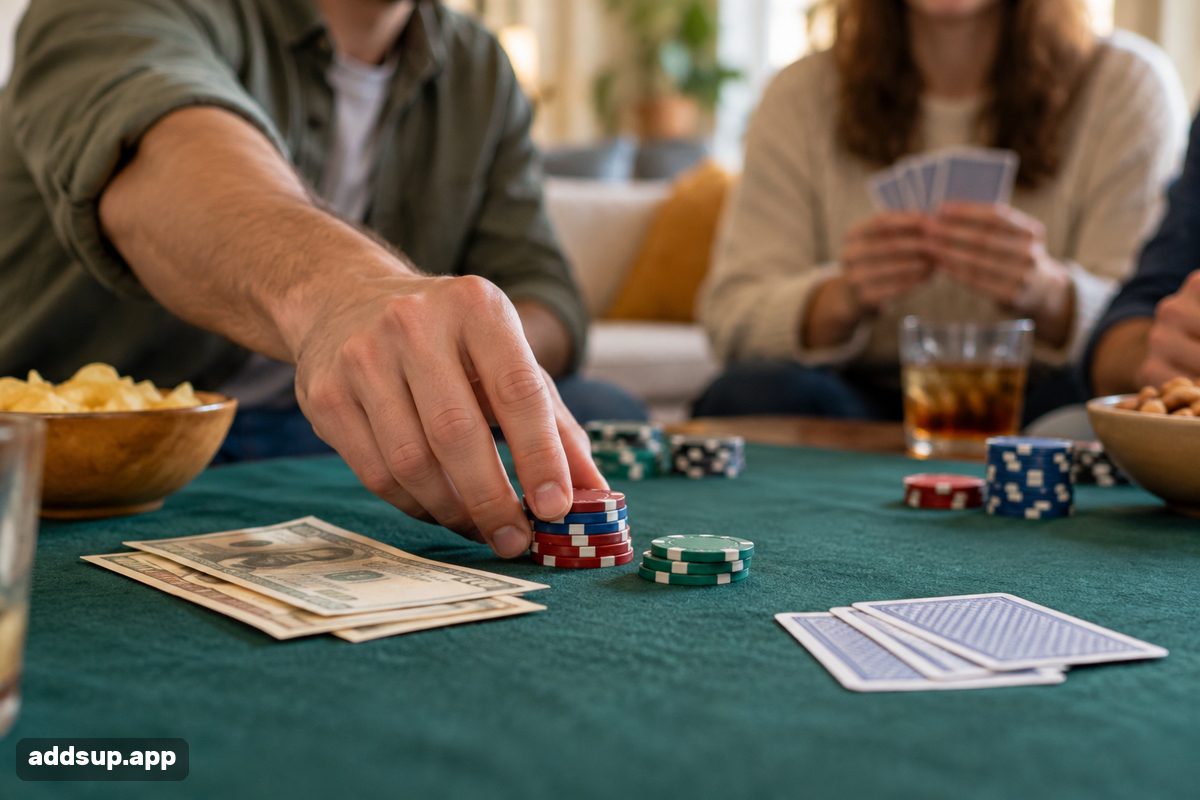
The right buy-in for a home poker night is the amount the most cautious player at the table could lose without it changing anything about their week, capped in advance at two or three re-entries, with a window that closes before the night ends.
The first question in every new group, and sometimes in a group that has been playing for two years, is how much to buy in for. One person says a hundred, another says three hundred, and usually whoever said it with the most confidence wins. That is the worst way to set the number, because it picks the bravest player instead of what suits the table.
The one rule that actually decides it
The right amount for a home poker night is the amount the most cautious player at the table could lose without it changing anything about their week. Not the amount they would agree to under pressure, but the amount they will have forgotten by Tuesday.
The reason is practical, not polite. A good night depends on everyone playing the same game. The moment one player feels the buy-in is too big for them, they fold nearly every hand, they do not enjoy themselves, and next time they suddenly have something else on. A table set by its cautious end is a table that keeps existing. A table set by its boldest end loses a player every few months.
Three practical anchors
The morning-after test. If the maximum someone could lose in a night is an amount they would still be thinking about the next morning, it is too high. A home game should cost what a night out costs, not what a financial decision costs.
The length of the evening. A buy-in that is too small runs out fast, everyone enters again and again, and you end up playing for far more than you planned without anyone having decided to. A sensible buy-in lets an average player last about two hours.
The same starting amount for everyone. When each player starts on the same number, everyone begins in the same place and the count at the end stays simple. Differences should be created by the play, which is the whole point, not built in before the first hand.
The cap: the decision nobody remembers to make
The buy-in on its own says almost nothing. What determines the real cost of the night is how many times a player can enter again. Without a decision in advance, the true stakes get set at 1am by whoever most wants to win their money back, which is precisely the hour when nobody judges well.
Two decisions solve it, and they take a minute before the first hand is dealt. The first is how many re-entries are allowed per night, usually two or three. The second is when the window closes, roughly an hour before you plan to stop. A fresh entry in the last fifteen minutes stretches a night everyone has already ended in their head, and drops a player with a completely different mood into the game.
All agreed, until somebody cannot remember
The clearest agreement in the world falls apart the second nobody is sure whether Danny entered twice or three times. Adds Up exists for exactly that part: the host taps every entry the moment it happens, the whole table watches the pot live, and when the night ends the app says who pays, to whom, and how much, in the fewest transfers. No real money inside the app and no payment connections, just the count.
Three mistakes every group makes
Setting the number by asking the strongest player. They will be happy with any amount, which is exactly why their opinion should not decide it. Ask the person who hesitates.
Changing the buy-in mid-evening. Raising it after play has started creates two different games in one night, and an argument about which number applied when. You change it next time, not now.
Relying on "we will remember later". Every entry that is not logged the moment it happens is a gap that surfaces at the end of the night, always as an awkward question rather than a number.
The right buy-in is the one nobody thinks about during the night. Set it once, set a cap with it, log as you go, and get back to what actually matters: that hand, and the excuse of whoever lost it.
Questions from the table
How much money should you bring to a home poker night?
Exactly what the cap allows: the first buy-in plus the number of re-entries agreed in advance. If the buy-in is 100 and two re-entries are allowed, 300 covers the entire night.
How do you set a buy-in when players are in different financial places?
Set it by the cautious end of the table, not the average. A player who feels the amount is too big folds everything, does not enjoy the night, and finds something else to do next time. The amount everyone is relaxed about is the amount that keeps a regular group together.
What is a re-entry cap and why do you need one?
It is an advance decision about how many times a player may enter again during the same night. Without it, the real stakes get decided at 1am by whoever most wants to win back a loss, which is a decision nobody would have made at the start of the evening.
Does everyone have to buy in for the same amount?
For the first buy-in, yes. An identical starting amount keeps it one table and keeps the count simple. Re-entries can differ between players, as long as they stay inside the agreed cap and are logged as they happen.
When should you close the window for re-entries?
Roughly an hour before you plan to finish. A fresh entry in the last fifteen minutes changes the game for the whole table and stretches a night everyone has already mentally ended.
How do you remember at the end how much each player put in?
You do not remember, you log. Every entry is recorded the moment it happens, so at the end of the night there is a number instead of a question. Hour-old memory at 1am is the first thing to go.